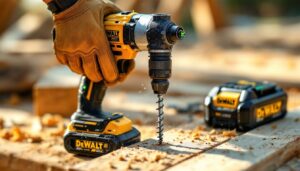
If you’ve spent any time wrestling with lag bolts or watching your wrist give out halfway through decking a porch, you already know that a standard drill isn’t always enough. Enter the 1/2-inch impact driver, a tool that delivers serious rotational torque without snapping your forearm. It’s the middle ground between lightweight compact drivers and industrial impact wrenches, and for homeowners tackling structural fastening, automotive work, or heavy deck builds, it’s often the sweet spot. This guide covers what sets a 1/2 impact driver apart, why you’d choose one over smaller models, what features actually matter, and how to use it safely around the house.
Table of Contents
ToggleKey Takeaways
- A 1/2 impact driver delivers high rotational torque through rapid percussive bursts, making it ideal for driving large structural fasteners and lag bolts without wrist strain or tool kickback.
- The 1/2-inch drive size accepts standard deep-well and impact-rated sockets, bridging the gap between lightweight compact drivers and industrial impact wrenches for mixed-use home projects.
- For home use, look for 1/2 impact drivers with 150–250 ft-lbs of torque, brushless motors, and 18V or 20V batteries with at least 4.0 Ah capacity for moderate projects.
- Key applications include deck framing, fence installation, automotive work, and heavy equipment mounting, but avoid using a 1/2 impact driver for fine woodworking or drywall where precision and finesse are required.
- Always use impact-rated sockets and bits to prevent shattering, consult local building codes for structural fastening (especially ledger boards), and finish critical fasteners with a calibrated torque wrench for safety and longevity.
- Proper maintenance—keeping the anvil clean, storing batteries at room temperature, and checking fasteners for correct thread engagement—ensures long-lasting performance and prevents costly mistakes.
What Is a 1/2 Impact Driver and How Does It Work?
A 1/2-inch impact driver is a power tool designed to deliver high rotational force, torque, through rapid, percussive bursts rather than constant pressure. The “1/2-inch” refers to the square drive size (the anvil), which matches the same socket standard used by many impact wrenches and ratchets. This is different from the typical 1/4-inch hex chuck found on compact impact drivers used for screws and light fasteners.
Inside the tool, a spring-loaded hammer mechanism strikes an anvil dozens of times per second as the motor spins. Each impact transfers energy to the fastener without transferring much rotational kickback to your hand or wrist. That’s why you can drive large lag screws, through-bolts, or structural fasteners without the tool twisting out of your grip.
Most 1/2 impact drivers are cordless and run on 18V or 20V lithium-ion batteries, though some higher-end models operate at 24V for added power. Corded versions exist but are less common in the DIY space. The combination of percussive action and high torque makes these tools ideal for applications where a drill would stall or a standard impact driver would lack the socket compatibility.
Why Choose a 1/2 Impact Driver for Your DIY Projects?
Homeowners often ask whether they really need a 1/2 impact driver when they already own a drill or compact impact driver. The answer depends on the work you’re doing.
If you’re building a deck, pergola, or shed, you’ll be driving 6-inch structural screws or lag bolts into doubled-up 2x lumber. A drill will bog down or strip the head. A compact 1/4-inch impact driver can handle smaller fasteners, but it won’t accept standard sockets, which limits you when working with hex-head bolts or large washers.
A 1/2 impact driver bridges that gap. It accepts deep-well and impact-rated sockets, making it a go-to for automotive impact driver tasks, swapping tires, removing rusty bolts on a trailer hitch, or installing carriage bolts on a gate. It’s also the right choice when you’re mounting heavy equipment like a wall-mounted garage door opener, attaching ledger boards for a deck (after proper flashing and code-compliant fastening, of course), or assembling play structures that call for large hex-head hardware.
Compared to a full-size 1/2-inch impact wrench, a 1/2 impact driver is lighter, more maneuverable, and better suited to mixed-use scenarios around the home. Impact wrenches excel at repetitive, high-torque removal (think lug nuts), but they’re overkill, and often too heavy, for general fastening work. The impact driver strikes a balance: enough muscle for structural work, but nimble enough to use overhead or in tight spaces.
Key Features to Look for When Buying a 1/2 Impact Driver
Not all 1/2 impact drivers are created equal. Here’s what separates a solid tool from one that’ll leave you frustrated.
Torque and Power Specifications
Torque is measured in foot-pounds (ft-lbs) or Newton-meters (Nm). For a 1/2 impact driver aimed at home use, look for 150–250 ft-lbs of maximum torque. That’s enough to drive 5/16-inch lag screws into framing lumber or remove rusted bolts without stripping.
Some models offer multiple speed or torque settings, low for precision, high for power. Variable-speed triggers are standard, but look for tools with an electronic brake that stops the anvil quickly when you release the trigger. This prevents over-driving and gives you better control on finish work.
Brushless motors are now the norm in quality impact power tools. They’re more efficient, generate less heat, and last longer than brushed motors. If you’re buying new in 2026, don’t settle for a brushed motor unless budget is the only consideration.
Battery Life and Charging Options
Most 1/2 impact drivers run on 18V or 20V Max lithium-ion batteries (the difference is mostly marketing, 20V Max measures at full charge, 18V nominal). A 4.0 Ah battery is a good baseline for moderate use: 5.0–6.0 Ah gives you longer runtime, especially important if you’re spending a day building a fence or framing a shed.
Look for a kit that includes two batteries. One charges while you work with the other. Rapid chargers (30–60 minutes for a full charge) are worth the upgrade if you’re doing all-day projects.
Pay attention to battery platform compatibility. If you already own cordless tools from a major brand, buying within that ecosystem saves money and drawer space. Cross-compatibility means one set of batteries powers your drill, circular saw, and impact driver.
Best Applications for Your 1/2 Impact Driver Around the Home
Here’s where a 1/2 impact driver earns its keep:
Decking and Framing: Driving structural screws (typically #10 or #12 gauge, 3–6 inches long) into joists, beams, and ledger boards. Use impact-rated bits and sockets to avoid breakage. Remember: ledger board attachment to a house requires specific fasteners (typically 1/2-inch lag screws or through-bolts) and flashing per IRC guidelines. Always check local codes.
Fence and Gate Installation: Setting carriage bolts, hex-head bolts, and lag screws in 4×4 posts and rails. The percussive action helps seat fasteners in pressure-treated lumber, which can be dense and fibrous.
Automotive and Trailer Work: Swapping wheels (though a torque wrench is required for final tightening to manufacturer specs), removing rusted exhaust hangers, or installing hitch receivers. This is classic automotive impact driver territory, just don’t rely solely on the driver for lug nuts: always finish with a calibrated torque wrench.
Heavy Equipment Mounting: Installing ceiling joists for a garage storage system, mounting a wall-mounted workbench, or securing HVAC brackets. The 1/2-inch drive lets you use deep sockets for recessed bolts.
Play Structures and Outdoor Furniture: Many swing sets and pergola kits use 5/16-inch or 3/8-inch hex-head bolts with washers. A 1/2 impact driver with the right socket makes assembly faster and less fatiguing than a ratchet.
Not Recommended For: Fine woodworking, cabinetry, or drywall. The tool is too powerful and lacks the finesse needed for finish screws. Stick with a drill or compact impact driver for those tasks. According to experts at This Old House, choosing the right tool for delicate trim work prevents costly mistakes.
Safety Tips and Maintenance for Long-Lasting Performance
Impact drivers pack serious torque, and that demands respect.
Wear Proper PPE: Always use safety glasses or goggles. Flying metal shavings, broken fasteners, or splintered wood are real hazards. If you’re working with pressure-treated lumber or composite decking, wear a dust mask. Use hearing protection, impact drivers can exceed 100 dB, especially in enclosed spaces.
Use Impact-Rated Sockets and Bits: Standard chrome sockets can shatter under percussive force. Impact-rated sockets are made from softer, tougher steel designed to flex rather than fracture. The same goes for bits, look for black oxide or hex-shank bits labeled for impact use. Popular Mechanics regularly tests impact-rated accessories for durability under real-world conditions.
Check Fastener Specs: Over-torquing can strip threads, snap bolts, or crack lumber. If you’re working on structural elements, deck ledgers, stair stringers, or load-bearing connections, consult the IRC or your local building code for fastener type, size, and spacing. When in doubt, finish critical fasteners with a torque wrench set to manufacturer specs.
Maintain Your Tool: Keep the anvil and socket clean. Metal dust and debris can jam the mechanism. Wipe down the tool after dusty jobs. Store batteries at room temperature, ideally at 40–60% charge if you won’t use them for weeks. Periodically check that the belt clip, handle, and trigger are secure.
Avoid Cross-Threading: The percussive action can drive a fastener even if it’s not seated correctly. Start fasteners by hand or with low speed to ensure proper thread engagement, then ramp up. Cross-threaded bolts in treated lumber or metal brackets are nearly impossible to remove without damage.
Know When to Call a Pro: Structural fastening, especially ledger boards for elevated decks, requires permits and inspections in most jurisdictions. If you’re unsure whether your project involves load-bearing elements, consult a licensed contractor or building inspector. For detailed project planning and tool selection guidance, experienced builders recommend starting with a clear materials list and code checklist.
With the right 1/2 impact driver and a healthy respect for its power, homeowners can tackle serious fastening jobs with confidence, and a lot less wrist strain.