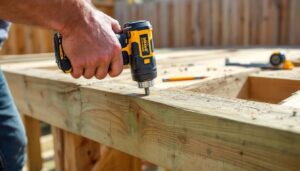
If there’s one tool that separates casual weekend warriors from serious DIYers, it’s the impact driver. And when it comes to impact drivers, DeWalt has built a reputation that’s hard to ignore. Whether someone’s installing deck screws, drilling into masonry, or assembling furniture, a DeWalt impact drill delivers torque and speed that a standard drill simply can’t match. But with dozens of models on the market, from the DeWalt 20V Max XR impact driver to compact brushless versions, choosing the right one isn’t always straightforward. This guide breaks down what makes DeWalt’s lineup stand out, which features actually matter, and how to match the tool to the project at hand.
Table of Contents
ToggleKey Takeaways
- DeWalt impact drills deliver superior torque and rapid-fire impacts (up to 3,000 per minute) that prevent cam-out and handle dense materials like pressure-treated lumber better than standard drills.
- The DeWalt 20V Max battery platform offers extensive compatibility across multiple tools, saving money and reducing workshop clutter for DIYers with existing DeWalt equipment.
- For homeowners, mid-range brushless models like the DeWalt 20V Max XR (DCF887) offer the best balance of power, runtime, and cost, while entry-level models like the DCF885 are ideal for budget-conscious beginners.
- Brushless motors deliver 50% longer runtime and significantly longer motor life compared to brushed alternatives, making them worth the upfront investment for frequent users.
- Always use impact-rated bits (titanium-coated or carbide), start with lowest speed settings for delicate tasks, and avoid using impact drivers for masonry work—a hammer drill is more appropriate for that purpose.
- Regular battery care (storing at room temperature and maintaining 50% charge during storage), chuck cleaning, and vent inspection are essential maintenance practices that extend your tool’s lifespan for years of reliable use.
What Makes DeWalt Impact Drills Stand Out from the Competition?
DeWalt didn’t earn its yellow-and-black reputation by accident. The brand’s impact drivers consistently rank among the top performers in independent testing, and there’s good reason for that.
First, torque delivery. DeWalt impact drills, especially the DeWalt 20V impact driver models, deliver rotational force in short, rapid bursts, sometimes up to 3,000 impacts per minute. This hammering action drives fasteners quickly without cam-out (that frustrating moment when the bit slips out of the screw head). For dense materials like pressure-treated lumber or hardwood, that matters.
Second, battery compatibility. DeWalt’s 20V Max platform is one of the most extensive in the industry. Someone who owns a DeWalt circular saw, reciprocating saw, or work light can swap batteries across tools. That interoperability saves money and reduces clutter in the workshop.
Third, build quality. DeWalt tools are designed to handle jobsite abuse, drops, dust, vibration. The housing on most models uses reinforced polymer and rubberized grips that hold up to repeated use. For homeowners who might only use the tool a few times a month, this durability translates to a tool that lasts decades, not just years.
Finally, serviceability. DeWalt maintains a wide network of service centers, and replacement parts are readily available. When a tool does wear out, it’s often repairable rather than disposable.
Key Features to Look for in a DeWalt Impact Drill
Not all impact drivers are created equal, and understanding the spec sheet prevents costly mismatches between tool and task.
Chuck size is the first decision. Most DeWalt impact drivers use a 1/4-inch hex chuck, which accepts hex-shanked driver bits and drill bits. This is the standard for impact work, faster bit changes, no slippage. If a project involves a lot of drilling (as opposed to driving), a standard drill with a 1/2-inch keyless chuck might be a better companion tool.
Torque rating tells how much twisting force the tool delivers, measured in inch-pounds (in-lbs). Entry-level models deliver around 1,400 in-lbs, enough for general fastening. Mid-range models like the DeWalt brushless impact driver can hit 1,800 in-lbs or more, suitable for lag screws and dense framing lumber. Top-tier models push 2,000+ in-lbs, which is overkill for most home projects but useful for anyone doing structural work or working with 3-inch screws regularly.
Speed and impact rate are often listed as variable. A quality DeWalt impact driver offers multiple speed settings and trigger control, allowing the user to dial down power for delicate tasks (like assembling cabinets) and ramp up for heavy fastening.
LED work lights might seem like a gimmick, but they’re genuinely useful in crawl spaces, closets, or anywhere overhead lighting is poor. DeWalt typically integrates lights near the chuck, and many models include a delay so the light stays on for a few seconds after releasing the trigger.
Compact vs. standard size affects maneuverability. Compact models (often under 5.5 inches front-to-back) fit into tight spaces like between joists or inside cabinets. Standard models are slightly larger but often deliver more power and include larger batteries for extended runtime.
Top DeWalt Impact Drill Models for Homeowners and DIYers
Choosing a model comes down to budget, frequency of use, and the kinds of projects on the to-do list.
The DeWalt DCF885 is a solid entry-level choice. It’s compact (5.55 inches long), delivers 1,400 in-lbs of torque, and comes in kit form with a charger and two 1.5Ah batteries. It’s powerful enough for assembling shelving, installing trim, or building a basic deck. For someone just getting into DIY or supplementing an existing drill, this is a no-regrets purchase.
Stepping up, the DeWalt 20V Max XR impact driver (DCF887) is the model that frequently tops reviews, including those from independent testing platforms. It’s brushless (more on that below), delivers up to 1,825 in-lbs of torque, and features three-speed settings plus Precision Drive mode for fine control. The XR designation means extended runtime, pairing it with a 4Ah or 5Ah battery provides hours of work on a single charge. This is the sweet spot for serious DIYers and weekend remodelers.
For those who need maximum power, the DeWalt DCF899 (1/2-inch impact wrench) crosses into professional territory. It’s designed for automotive work and heavy structural fastening, with torque ratings approaching 700 ft-lbs. That’s well beyond what most homeowners need, but it’s worth mentioning for anyone working on vehicles or doing timber-frame construction.
Brushless vs. Brushed Motors
This distinction matters more than marketing might suggest. Brushed motors use carbon brushes that make contact with the motor’s commutator to transfer electricity. They’re simpler and cheaper, but the brushes wear out over time and create friction, which wastes battery power as heat.
Brushless motors, like those in the DeWalt brushless impact driver models, use electronic controllers instead of brushes. The result: about 50% longer runtime per charge, more power in a smaller package, and significantly longer motor life. For tools used frequently, brushless is worth the extra cost upfront. For occasional use, brushed motors are still reliable and budget-friendly.
How to Use Your DeWalt Impact Drill for Common Home Projects
Impact drivers excel at driving screws, but they’re not interchangeable with drills in every scenario. Knowing when to reach for the impact driver, and when to grab a standard drill, prevents stripped screws and broken bits.
Deck building is where the DeWalt 20V impact driver truly shines. Driving 3-inch deck screws into pressure-treated lumber or composite decking is tedious with a standard drill. An impact driver punches through without pre-drilling in most cases. Use a magnetic bit holder and #2 square-drive or Torx bits for best results. Always wear safety glasses, fasteners can snap, and wood chips fly.
Hanging cabinets requires finesse. Switch to the lowest speed setting or Precision Drive mode to avoid over-driving screws. When fastening into studs, use 2.5-inch cabinet screws. The impact driver’s one-handed operation makes it easier to hold the cabinet level while driving screws, but have a helper for upper cabinets, trying to do it solo is a recipe for crooked installs.
Drilling into masonry is possible with an impact driver, but it’s not ideal. Impact drivers deliver rotational impacts, not the hammering action of a hammer drill. For occasional small holes in brick or concrete (like mounting a mailbox), use carbide-tipped masonry bits and expect slower progress. For multiple holes or anything over 1/4 inch, rent or buy a hammer drill.
Furniture assembly is where beginners often over-torque and strip out particleboard or MDF. Use the DeWalt 1/4 impact driver on its lowest setting, or consider a standard drill for furniture work. If using the impact driver, back off the trigger just before the screw seats fully, then finish by hand with a screwdriver.
Framing and structural work suits the higher-torque models. Driving 3.5-inch framing screws or structural screws into doubled-up 2x lumber (actual dimensions: 1.5″ x thickness) is fast work with a brushless model. Always check local building codes, some jurisdictions require specific fasteners or spacing, and structural work often requires permits.
Safety note: Always use impact-rated bits. Standard drill bits can shatter under the repeated impacts. Black oxide bits are fine for light use: titanium-coated or carbide bits last longer under heavy use. Keep hands clear of the bit path, and if a screw isn’t seating properly, stop and investigate, forcing it risks stripping the head or damaging the material.
Maintenance Tips to Keep Your Impact Drill Running Strong
DeWalt tools are built to last, but a little preventive care extends that lifespan considerably.
Battery care is the single biggest factor in long-term performance. Lithium-ion batteries degrade over time, but best practices slow that process. Store batteries at room temperature (extreme heat or cold accelerates wear). Don’t let them sit fully discharged for long periods, if a tool won’t be used for months, charge the battery to about 50% first. For anyone working in cold weather, keep a spare battery inside a jacket pocket to maintain warmth: cold batteries deliver less power.
Clean the chuck regularly. Dust and debris accumulate in the hex socket, which can prevent bits from seating fully. Use compressed air or a small brush to clear it out every few weeks, more often in dusty environments like drywall work or demolition.
Inspect the housing and vents. Most DeWalt impact drivers have cooling vents molded into the case. If those clog with sawdust, the motor can overheat. Wipe the tool down after use and blow out the vents periodically. If the tool has taken a hard drop, check for cracks in the housing, small cracks can let in moisture and dust.
Lubrication is generally not required for impact drivers. The internal anvil and hammer mechanism is sealed and lubricated at the factory. Over-lubricating can attract dust and gum up the works. If the tool starts making unusual grinding noises or loses power, that’s a sign to visit a DeWalt service center rather than attempting DIY repairs.
Bit maintenance affects performance more than most users realize. Dull or damaged bits increase wear on the tool and the user. Replace bits when the tips show rounding or chipping. Magnetic bit holders reduce wobble and improve bit life, especially when driving at angles.
For serious DIYers, keeping a maintenance log isn’t overkill. Note battery charge cycles, any drops or impacts, and when bits or accessories were replaced. Most failures give warning signs, diminished runtime, reduced torque, odd noises. Catching those early means repairs instead of replacement. Keeping up with routine tool maintenance practices can prevent costly downtime on larger projects.
Conclusion
Choosing the right impact drill DeWalt model comes down to matching the tool to the work ahead. For weekend projects and general home maintenance, a mid-range brushless model like the DCF887 offers the best balance of power, runtime, and cost. For those just starting out or working on a tight budget, the DCF885 gets the job done without compromise. Either way, prioritize battery compatibility, invest in quality bits, and don’t skip the PPE. With proper use and basic maintenance, a DeWalt impact driver becomes the go-to tool in the workshop, and stays there for years.