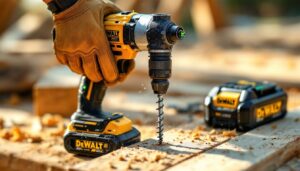
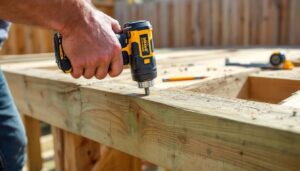
An impact driver might look like a drill’s compact cousin, but it’s designed for a completely different job. Where a drill excels at boring holes, an impact driver delivers rotational force (torque) with short, powerful bursts, perfect for driving long screws into dense material without stripping heads or taxing your wrist. If you’ve ever struggled to sink 3-inch deck screws into pressure-treated lumber with a standard drill, you already know why pros keep an impact driver in their kit. This guide covers what sets impact drivers apart, the features that matter most, and the top models worth considering in 2026, whether you’re building a deck, assembling furniture, or tackling cabinet installs.
Table of Contents
ToggleKey Takeaways
- An impact driver delivers rotational force through short, powerful bursts, making it ideal for driving long screws into dense materials without stripping heads or causing wrist strain.
- The best impact driver depends on your project scope: mid-range torque (1,500–1,800 in-lbs) suits homeowners tackling decks and remodels, while compact models work best for finish carpentry and overhead work.
- Brushless motors are now standard on quality impact drivers, offering 30–50% more runtime on the same battery compared to brushed models.
- Battery platform compatibility is critical—staying within one ecosystem (DeWalt 20V MAX, Milwaukee M18, Makita 18V LXT, or Ryobi ONE+) saves money on duplicate chargers and expands your tool lineup.
- Always use hex-shank impact-rated bits, wear safety glasses and hearing protection, and avoid overdriving fasteners to prevent compromising holding power and safety.
- Check local building codes for structural applications—improper fastener selection in load-bearing work like deck framing is a common DIY mistake that can compromise safety.
What Is an Impact Driver and Why You Need One
An impact driver is a fastening tool that uses concussive rotational force to drive screws and bolts efficiently. Unlike a standard drill, which applies steady rotational torque, an impact driver delivers quick, repetitive impacts (similar to a hammer striking an anvil) when resistance increases. This mechanism prevents cam-out, the frustrating slip of a driver bit from a screw head, and reduces the reactive twisting force transferred to the user’s wrist.
The impact driver tool uses a hexagonal (hex) collet, typically ¼-inch, that accepts hex-shank bits. You won’t find a traditional three-jaw chuck here, which means you can’t use round-shank drill bits without an adapter. That trade-off is intentional: the hex system locks bits securely and handles high torque without slipping.
Why choose an impact drill driver over a drill? When driving fasteners longer than 2 inches, working with dense hardwoods or engineered lumber, or assembling metal framing, the impact driver’s concussive action cuts through resistance that would bog down a standard drill. According to This Old House, pros rely on impact drivers for deck framing, cabinet installation, and any task involving lag screws or structural fasteners. You’ll also appreciate the compact form factor: most impact drivers are shorter nose-to-tail than a drill/driver, making them easier to maneuver in tight spaces like between studs or inside cabinets.
For homeowners, a cordless impact driver paired with a cordless drill covers nearly every fastening and boring need. The drill handles holes and low-torque tasks: the impact driver tackles heavy-duty fastening without the fatigue.
Key Features to Look for When Choosing an Impact Driver
Not all impact drivers deliver the same performance. Knowing which specs matter, and which are marketing fluff, helps you pick the right tool for your project load.
Torque and Speed Settings
Torque is measured in inch-pounds (in-lbs) or newton-meters (Nm). Entry-level models start around 1,000–1,400 in-lbs, which handles general trim work, furniture assembly, and light framing. Mid-range drivers (1,500–1,800 in-lbs) suit deck building and cabinetry. Heavy duty impact driver models push 2,000+ in-lbs and tackle lag bolts, structural screws, and commercial framing.
Don’t assume more is always better. Excessive torque on small fasteners can snap screw heads or overdrive them into softwood. Look for variable speed triggers and multiple speed/torque modes (typically 2–4 settings). A lower setting prevents overdriving finish screws: high torque mode powers through 5-inch structural screws into doubled-up joists.
RPM (revolutions per minute) and IPM (impacts per minute) both matter. RPM ranges from 0–2,500 to 0–3,600 on most models: IPM typically runs 3,000–4,000. Higher IPM translates to faster driving speed and better performance in dense material. If you’re comparing impact driver reviews, prioritize models with at least 3,200 IPM for versatility.
Some newer drivers include auto-stop or precision modes that stop driving once the fastener seats, helpful for preventing overdriving in drywall or finish work.
Battery Life and Compatibility
Battery platform may be the single most important decision. If you already own cordless tools, stay within that ecosystem, mixing brands means duplicate chargers and incompatible batteries. Major platforms (DeWalt 20V MAX, Milwaukee M18, Makita 18V LXT, Ryobi ONE+) offer dozens of compatible tools.
For battery capacity, 2.0 Ah batteries keep a small impact driver lightweight for overhead work or finish tasks. 4.0–5.0 Ah packs balance runtime and weight for general use. 6.0 Ah and higher suit full-day framing or commercial jobs but add noticeable heft.
Brushless motors are now standard on quality drivers. They run cooler, deliver more power per charge, and last significantly longer than brushed motors. According to testing from Good Housekeeping, brushless models often provide 30–50% more runtime on the same battery.
Check for fuel gauges on the battery or tool body, handy for knowing when to swap packs mid-project. Some premium models include onboard LED work lights, which are surprisingly useful when working inside cabinets or under decks.
Top Impact Drivers for Homeowners and DIY Projects in 2026
Here are the standout models for different use cases, based on performance, value, and real-world feedback from DIYers and pros.
Best Overall: DeWalt DCF850 (20V MAX)
Torque: 1,800 in-lbs | Weight: 2.9 lbs | IPM: 4,000
The DCF850 balances power, size, and ergonomics better than most. Its three-speed transmission lets users dial down for trim screws or ramp up for structural fasteners. The compact head (5.3 inches) fits between 16-inch on-center studs with room to spare. DeWalt’s 20V MAX platform is widely available, and batteries interchange across their drill, circular saw, and oscillating tool lines. This cordless impact drill handles everything from deck framing to cabinet hinges without switching tools.
Best for Heavy-Duty Work: Milwaukee 2960-20 (M18 FUEL)
Torque: 2,750 in-lbs | Weight: 3.4 lbs | IPM: 4,600
If you’re driving ½-inch lag bolts or building timber-frame structures, this heavy duty impact driver delivers pro-level torque. Milwaukee’s FUEL line uses a brushless motor optimized for maximum output. Four-mode DRIVE CONTROL includes a self-tapping screw mode that prevents walking when starting fasteners. It’s heavier than compact models, but the added mass helps control the tool during high-torque applications. The M18 battery platform is robust, though batteries and chargers run slightly more expensive than competitors.
Best Compact: Makita XDT16Z (18V LXT)
Torque: 1,550 in-lbs | Weight: 2.6 lbs | IPM: 3,800
This small impact driver is ideal for finish carpentry, cabinetry, and overhead work where fatigue matters. At just over 5 inches long, it’s one of the shortest drivers available. The Quick-Shift Mode automatically adjusts speed and torque for optimal fastening, no manual mode switching required. Makita’s LXT batteries are known for longevity, and the platform includes over 275 compatible tools. If you already own Makita gear or prioritize lightweight handling, this is the pick.
Best Budget: Ryobi PCL660B (ONE+ HP)
Torque: 1,800 in-lbs | Weight: 3.1 lbs | IPM: 3,400
Ryobi’s ONE+ platform offers the best value for occasional users who want solid performance without the pro price tag. The PCL660B includes three-speed settings and a brushless motor, features usually reserved for pricier models. It’s slightly bulkier than DeWalt or Makita compacts, but performance is on par for typical DIY tasks. The real advantage is Ryobi’s massive tool lineup, over 280 products, all using the same 18V battery. For weekend warriors building one or two projects per year, this delivers excellent bang for the buck.
What is the best impact driver? It depends on your project scope. Homeowners tackling decks and remodels should prioritize mid-range torque (1,500–1,800 in-lbs) and battery compatibility. Finish carpenters benefit from compact, lightweight models with precision modes. Framers and contractors need maximum torque and durability, even if it means added weight and cost.
How to Use an Impact Driver Safely and Effectively
An impact driver’s power demands respect. Follow these guidelines to work safely and get clean results.
Wear appropriate PPE. Always use safety glasses or goggles, impact drivers can snap screw heads or send metal shavings flying. Hearing protection is smart for extended use: the concussive mechanism produces sharp, repetitive noise that exceeds 100 dB. Work gloves improve grip but avoid loose-fitting ones that could catch on rotating components.
Use the correct bits. Hex-shank impact-rated bits are hardened to withstand the concussive force. Standard bits can shatter under impact, creating a safety hazard. Invest in a quality bit set with Phillips, square drive, and Torx profiles. Magnetic bit holders help keep fasteners aligned during startup.
Pre-drill pilot holes when necessary. Impact drivers reduce the need for pilots in softwoods, but hardwoods (oak, maple) and dense engineered lumber (LVL, glulam) benefit from a pilot hole sized to the screw’s core diameter (not the thread diameter). This prevents splitting and reduces load on the driver. Deck screws in pressure-treated lumber usually don’t require pilots unless you’re within 2 inches of a board edge.
Control speed and pressure. Start fasteners at low speed to prevent walking, then squeeze the trigger fully once the screw bites. Let the tool do the work, excessive downward pressure doesn’t increase speed and tires you out. The impact mechanism engages automatically when resistance increases, so you’ll hear and feel the change.
Avoid overdriving. Watch the fastener head as it approaches flush. Release the trigger as soon as the head contacts the surface, especially in softwoods or drywall. Overdriven screws lose holding power and create dimples that require patching.
Secure the workpiece. The sudden impacts can shift unsecured boards. Clamp pieces when possible, or have a helper stabilize them. This is critical for long fasteners in end grain, where the wood may want to rotate.
Mind the battery. Cold temperatures (below 40°F) significantly reduce lithium-ion battery performance. Store batteries indoors during winter projects. Conversely, don’t leave batteries in hot vehicles, heat degrades cells over time. If a battery feels excessively hot during use, let it cool before recharging.
Check local codes for structural work. If you’re using an impact driver for ledger board attachment, deck framing, or any load-bearing application, verify that your fastener type, size, and spacing meet the International Residential Code (IRC) or your local amendments. Many jurisdictions require structural screws or bolts to meet specific shear and tensile ratings. According to Popular Mechanics, improper fastener selection is a common DIY mistake that compromises structural integrity. When in doubt, consult a structural engineer or building inspector before starting.
Conclusion
An impact driver isn’t just a nice-to-have, it’s essential for anyone who regularly drives long screws or works with dense materials. The right model depends on your project mix: compact drivers suit finish work and cabinetry, mid-range models handle decks and remodels, and heavy-duty options power through structural framing. Battery compatibility and brushless motors should guide your decision as much as torque specs. With proper technique and safety habits, a quality impact driver will outlast a dozen DIY projects and make every fastening task faster and less fatiguing.