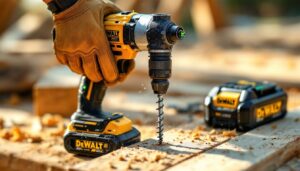
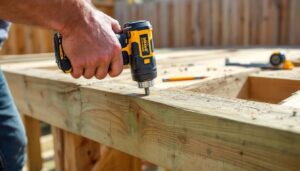
Milwaukee’s M12 impact driver isn’t just another cordless tool, it’s a compact game-changer that’s earned a spot on workbenches and in truck boxes across the country. If you’ve ever struggled with a bulky drill in a tight cabinet space or wished for something lighter for overhead work, you already know why compact impact drivers matter. The M12 platform delivers serious torque in a package small enough to fit where full-size drivers can’t, without the wrist fatigue that comes with swinging 18V monsters all day. Whether you’re assembling furniture, hanging cabinets, or building a deck, understanding what makes the M12 tick, and where it shines versus where it doesn’t, can save you time, money, and a lot of frustration.
Table of Contents
ToggleKey Takeaways
- The Milwaukee M12 impact driver delivers up to 1,300 inch-pounds of torque in a compact 5.7-inch package, making it ideal for deck building, cabinet installation, and tight-space work without the wrist fatigue of larger 18V drivers.
- The M12 Fuel model with brushless motor and variable speed trigger offers the best balance of power, portability, and price ($149 kit) for homeowners and DIYers tackling residential projects like furniture assembly and framing.
- Unlike standard drills, the M12 impact driver uses quick impact bursts rather than continuous force, preventing cam-out and screw stripping when driving 3-inch fasteners into pressure-treated lumber or composite decking.
- The massive M12 battery ecosystem powers multiple tools (rotary tools, multitools, circular saws), so investing in one platform eliminates the need for separate chargers and batteries across your tool collection.
- For homeowners choosing between M12 and M18 drivers, the M12 is the smarter purchase at 60% of the weight and cost while delivering 80% of capability for occasional residential projects.
- Using impact-rated hex-shank bits, starting screws at low speed, and avoiding over-torque on small fasteners will maximize tool lifespan and prevent damage to trim, drywall anchors, and soft materials.
What Is an M12 Impact Driver and Why Choose It?
An M12 impact driver is a cordless fastening tool that uses rotational impacts to drive screws and bolts with minimal effort from the user. Unlike a standard drill that applies constant rotational force, an impact driver delivers quick, powerful bursts, think of a hammer tapping a chisel versus pushing it steadily. That impact mechanism lets you sink 3-inch deck screws into pressure-treated lumber without pre-drilling or stripping screw heads.
The “M12” designation refers to Milwaukee’s 12-volt battery platform, which balances power and portability. At roughly 5.7 inches long and weighing around 2.3 pounds (tool only), the M12 impact driver fits comfortably in one hand and slips into spaces where larger drivers won’t. That compact footprint makes it ideal for cabinet installations, electrical boxes, HVAC ductwork, and automotive work where clearance is tight.
Why choose an M12 over a drill or a full-size impact driver? Three reasons: torque-to-weight ratio, battery runtime, and control. The M12 delivers up to 1,300 inch-pounds of torque (depending on the model), enough for most residential fastening tasks, while drawing less current than 18V tools. That means longer runtime per charge and less strain on your wrist during all-day projects. For DIYers and remodelers who aren’t driving lag bolts into engineered lumber daily, the M12 hits the sweet spot between capability and convenience.
Key Features That Make M12 Impact Drivers Stand Out
Milwaukee didn’t just shrink an M18 driver and call it a day. The M12 Fuel impact driver lineup includes brushless motors, which run cooler and last longer than brushed motors by eliminating friction from carbon brushes. Brushless motors also deliver more consistent power as the battery drains, so you’re not fighting a sluggish tool at the end of a charge.
The 1/4-inch hex chuck is standard across M12 impact drivers, accepting any hex-shank bit without adapters. That’s a time-saver when you’re switching between drilling pilot holes and driving screws, just pop in a new bit and go. The chuck uses a spring-loaded collar that grips bits securely, even under high torque.
LED work lights surround the chuck on most M12 models, illuminating the work surface without casting the shadow that a single top-mounted light creates. That’s genuinely useful when you’re working inside cabinets or crawl spaces where ambient light is poor.
Variable speed triggers give you fine control at low speeds (useful for starting screws without camming out) and full power when you squeeze harder. Most M12 drivers also include mode settings, typically two or three speed/torque combinations, so you can dial down power for trim work or small fasteners and crank it up for structural screws.
The RedLink Plus intelligence system is Milwaukee’s name for the chip that monitors tool temperature, battery charge, and motor load. If the tool overheats or the battery voltage drops too low, RedLink shuts it down before damage occurs. It’s insurance you won’t notice until it saves your tool from burning out mid-project.
Finally, the M12 battery ecosystem is massive. The same batteries power M12 rotary tools, oscillating multitools, circular saws, and even inflators. If you already own M12 tools, adding an impact driver means no new chargers or batteries cluttering your shop.
Best M12 Impact Driver Models for Homeowners and DIYers
Milwaukee offers several M12 impact driver models, but three stand out for residential and DIY use.
The Milwaukee M12 Fuel 1/4 Hex Impact Driver (model 2553-20) is the current flagship. It delivers 1,300 inch-pounds of torque and 3,300 RPM, which is enough to drive 5-inch screws into dimensional lumber without bogging down. The brushless motor and compact design (5.7 inches head length) make it the go-to for remodelers who need power without bulk. It’s typically sold as a kit with a 2.0Ah battery and charger for around $149, or bare tool for about $99.
The Milwaukee M12 Surge hydraulic impact driver (model 2551-20) is quieter, about 50% quieter than standard impact drivers, according to Milwaukee’s specs. Instead of a metal hammer-and-anvil mechanism, the Surge uses a hydraulic system to deliver impacts. That’s a real advantage if you’re working in occupied homes or apartments where noise complaints matter. The trade-off is slightly less torque (1,000 inch-pounds) and a higher price point (around $179 for the kit). For DIYers doing finish carpentry or cabinet work, the Surge’s reduced noise and vibration are worth the premium.
The Milwaukee M12 standard impact driver (model 2462-20) is the budget option. It uses a brushed motor, delivers 1,000 inch-pounds of torque, and lacks some features like multiple speed modes. But for occasional use, assembling furniture, hanging shelves, basic deck work, it’s hard to argue with the $79 bare tool price. Just know that the brushed motor won’t last as long under heavy use, and you’ll notice the power drop as the battery depletes.
For most homeowners and serious DIYers, the M12 Fuel 1/4 hex impact driver is the best balance of power, size, and price. It’s referenced in tool buying guides alongside premium 18V drivers for good reason, it punches above its voltage class.
Common DIY Projects Perfect for Your M12 Impact Driver
The M12 impact driver excels at projects where you’re driving dozens (or hundreds) of screws in a single session. Here’s where it shines:
Deck building: Driving 2.5-inch or 3-inch deck screws through composite or pressure-treated decking into joists is tedious with a drill. The M12’s impact mechanism prevents cam-out and drives screws flush without countersinking. Pair it with a square-drive bit for composite decking screws or a star-drive bit for structural screws.
Cabinet and shelf installation: Mounting upper cabinets requires one hand for holding the cabinet level and one for driving screws into studs. The M12’s light weight (under 2.5 pounds with a compact battery) reduces arm fatigue, and the short head length lets you work inside cabinet frames without banging into walls.
Furniture assembly: Flat-pack furniture typically uses cam locks and screws. The M12’s variable speed trigger lets you start screws slowly in particle board (which splits easily) and finish them quickly. Many enthusiasts writing for home workshop projects recommend an impact driver for this reason, less wrist strain than a manual screwdriver, more control than a corded drill.
Framing and structural work (light-duty): The M12 Fuel can handle 3-inch framing screws for shed construction, partition walls, or small framing projects. It’s not a replacement for an M18 driver on a full framing crew, but for weekend warriors building a garden shed or interior walls, it’s more than capable.
Automotive and mechanical work: Removing rusty bolts, assembling motorcycle parts, or swapping license plates, anywhere you’d normally use a ratchet, the M12 can speed things up. The compact size is a huge advantage under dashboards or in engine bays.
Always wear safety glasses when driving fasteners. Metal burrs, wood chips, and the occasional snapped screw head can fly unpredictably. For overhead work, add a dust mask, drywall dust and insulation fibers will rain down on you.
M12 vs. M18 Impact Drivers: Which One Do You Really Need?
The biggest question DIYers ask: should I buy an M12 or M18 impact driver? The answer depends on what you’re building and how often.
M18 advantages: More torque (up to 2,000+ inch-pounds on the M18 Fuel Surge), longer runtime with larger batteries (up to 12.0Ah), and better performance with lag bolts, large structural screws, and dense hardwoods. If you’re framing walls, building a timber-frame pergola, or driving fasteners all day, the M18 justifies its extra size and weight.
M12 advantages: Lighter weight (about 1 pound less than comparable M18 models), shorter head length (fits in tighter spaces), and lower cost (M12 kits start around $149 vs. $199+ for M18). For homeowners doing occasional projects, installing shelves, assembling furniture, light remodeling, the M12 delivers 80% of the M18’s capability at 60% of the weight.
Battery considerations: M12 batteries charge faster (a 2.0Ah battery charges in about 30 minutes) and weigh less. If you’re already invested in the M18 platform with a circular saw, reciprocating saw, or shop vac, adding an M18 impact driver makes sense. But if this is your first cordless tool, the M12 is a better entry point.
Real-world test: A popular test featured in DIY repair guides involved driving fifty 3-inch deck screws into pressure-treated 2×6 lumber. The M12 Fuel completed the task without stalling, though it drained the 2.0Ah battery about 30% faster than an M18 with a 5.0Ah battery. The M18 was noticeably heavier during overhead work.
Bottom line: If you’re a homeowner or weekend DIYer working on residential projects (not a pro framing houses), the M12 impact driver is the smarter buy. Save the M18 money for a circular saw or reciprocating saw, where the extra voltage truly matters.
Tips for Getting the Most Out of Your M12 Impact Driver
Match bits to fasteners. Impact-rated bits are heat-treated to withstand the hammering action inside the driver. Standard drill bits will shatter. Use hex-shank impact bits (look for black oxide or titanium coating) for screws, and save your twist bits for the drill.
Start screws at low speed. Squeeze the trigger gently to get the screw started without spinning it off-center. Once the threads bite, increase speed. This prevents stripped screw heads and split wood.
Use the right battery for the job. A 2.0Ah compact battery keeps the tool balanced and lightweight for overhead or extended work. A 4.0Ah or 6.0Ah battery adds runtime but also adds weight and bulk, overkill for most DIY tasks.
Pre-drill pilot holes in hardwood. The M12 will drive screws into oak or maple, but pre-drilling prevents splitting and extends bit life. Use a drill bit one size smaller than the screw shank.
Keep the chuck clean. Sawdust and metal shavings will gum up the chuck’s spring collar over time. Blow it out with compressed air or wipe it with a dry cloth after each project.
Don’t over-torque small fasteners. Cabinet hinges, electrical boxes, and trim screws don’t need 1,300 inch-pounds of force. Use the lower speed/torque mode (if your model has it) or stop driving once the screw is flush. Over-tightening cracks trim and strips threads in soft materials like drywall anchors.
Store batteries at 50% charge. Lithium-ion batteries last longest when stored partially charged in a cool, dry place. If you won’t use the tool for a month or more, charge the battery to about half capacity before putting it away.
Invest in a bit holder. A magnetic wrist strap or belt-mounted bit holder keeps your most-used bits within reach. Fumbling for bits in a toolbox kills momentum on big projects.
Conclusion
The Milwaukee M12 impact driver proves that bigger isn’t always better. For the vast majority of home improvement and DIY projects, from deck building to cabinet installs, the M12 delivers the torque, runtime, and control you need without the bulk and weight of 18V tools. The Milwaukee M12 Fuel impact driver is the sweet spot for most users, balancing power and price, while the Surge model caters to noise-sensitive environments. If you’re building out your first cordless tool kit or adding a dedicated fastening tool to your arsenal, the M12 platform is a smart, versatile foundation that’ll handle projects for years.